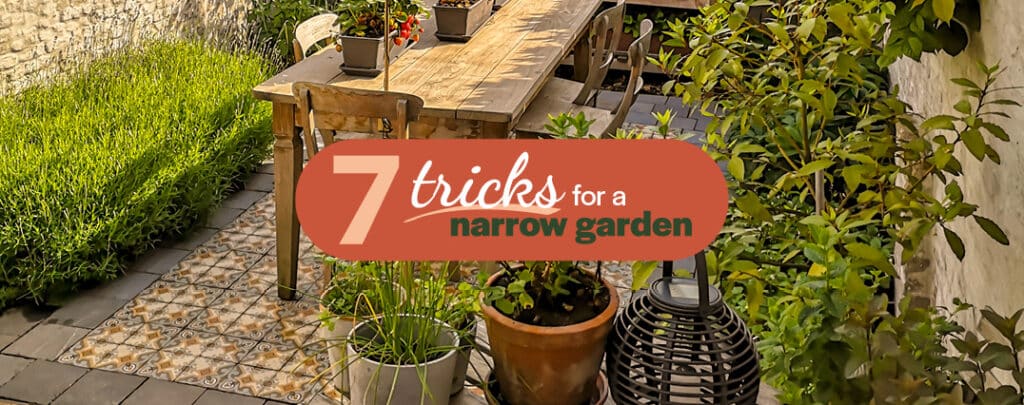
By making good use of clever techniques that emphasise proportion, create focal points and optimise layout, you can make your narrow garden appear wider and more appealing.
In this article, we will explore several tricks that professional landscape designers use to help make the most of narrow, long gardens.
Define Zones
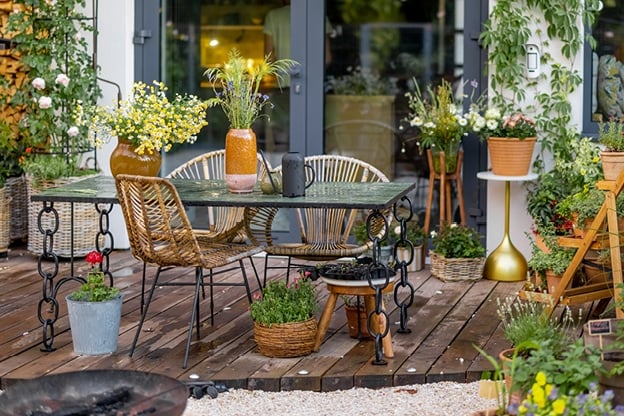
Dividing your garden into distinct zones or areas can add depth and structure to the space. Consider creating separate sections for lounging, dining and gardening. Make use of hedges, screens or trellises to delineate these zones, giving the illusion of multiple rooms within your garden. Each zone can be uniquely designed to fulfil specific purposes while maintaining a cohesive overall theme.
Vertical Gardening
Maximise the use of vertical space in your narrow garden by incorporating vertical gardens, trellises and climbing plants. By growing vines and climbers along walls or fences, you draw the eye upwards, creating an illusion of height and breadth. Use trellises to support colourful flowering vines or lush greenery, adding vertical interest and making the garden feel more expansive.

Mirrors and Reflective Surfaces
Strategically placed mirrors or reflective surfaces can work wonders in a narrow garden. By positioning them to reflect light and scenery, you create the illusion of increased width and depth. Install a mirror on a garden wall or fence, ensuring it reflects a visually appealing area, such as a focal point or a beautiful plant arrangement. Reflective surfaces like water features or metallic accents can also help bounce light around the garden and add a sense of spaciousness.
Clever Paving
Introduce curved lines and pathways into your garden design to counteract the linear nature of a narrow space. Curves add visual interest, create a sense of flow and soften the overall appearance. Utilise winding paths, curved flower beds, or meandering edges to break up the straight lines and make the garden feel less confined. Curved borders can also provide space for a wider variety of plants. Finally, make use of plank paving – such as Tobermore’s Stanza, Artro or Manhattan – in your pathways and patio to enhance the feeling of space and to draw the eye through the garden.

Strategic Planting
Careful selection and placement of plants is essential in a narrow garden. Opt for plants with varying heights, textures and colours to create depth and interest. Plant taller species towards the back of the garden to draw the eye upwards and give the illusion of additional space. Incorporate vertical accents like tall grasses or slender trees to add verticality without overpowering the narrow layout. Consider using containers or raised beds to bring greenery closer to eye level, providing a sense of intimacy and bringing focus to specific areas.
Lighting and Ambiance
Well-placed lighting can work wonders in transforming a narrow garden into an enchanting nighttime retreat. Install subtle, low-level lighting along pathways, in planting beds and near key features to create a warm and inviting atmosphere. Use uplights to highlight vertical elements and textures, emphasising the height and depth of your garden. Avoid harsh, direct lighting that can accentuate the narrowness; instead, opt for soft, diffused lighting for a cosy and magical effect.

Furniture and Accessories
Choose furniture and accessories that are proportionate to the size of your narrow garden. Opt for slimline, space-saving furniture that doesn’t overwhelm the space. Consider built-in seating along walls or fences to maximise the usable space. Use small-scale decorative elements such as potted plants, sculptures, or colourful cushions to add pops of interest without cluttering the area. By selecting appropriately sized furnishings and accessories, you create a balanced and harmonious ambiance.