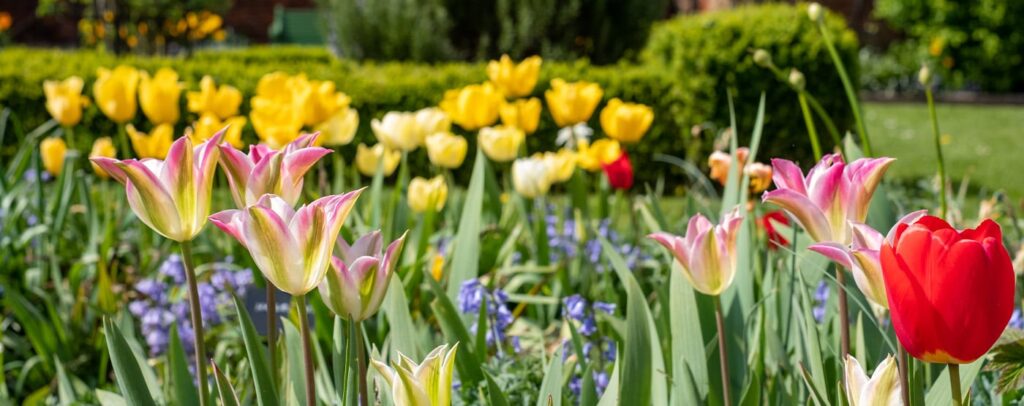
From snowdrops and daffodils to primroses and hellebores, gardeners use these blooms as a marker for the arrival of warmer weather and with it, a welcome return to spending time in the garden.
Spring flowers also play a crucial role in supporting pollinators. Bumblebees and certain butterflies, for instance, hibernate over the winter and rely on spring flowers for nectar and pollen upon awakening. The nectar provides energy for pollinators to fly and mate or find a nesting site, while the pollen helps bumble bees lay eggs for the next generation.
And of course, the first flowers of spring bring much needed colour and vibrance to a winter-worn outdoor space.
If you’re looking to add a splash of colour to your garden this spring, here are five easy-to-grow varieties you can try.
Primulas
Primulas are very versatile. They can be grown in borders or containers and they look at home in both informal and formal planting schemes.
Grow them in groups or mix them in with other spring-flowering blooms, whether that’s in borders, around the edge of garden features, or naturalised in your lawn.
Snowdrops
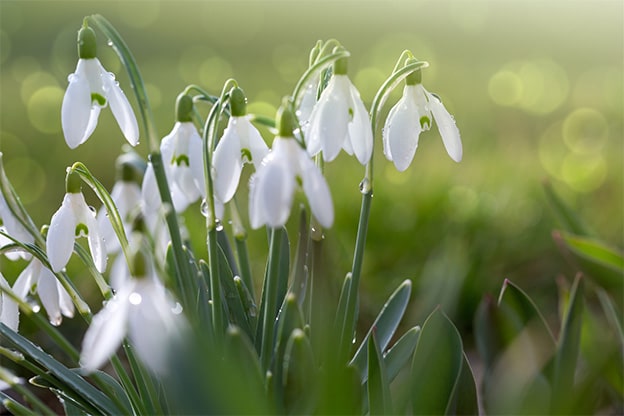
Snowdrops are among the first spring blooms, often appearing as early as January. Options range from the species Galanthus nivalis to larger cultivars with unique flower shapes, such as Galanthus ‘S. Arnott’ and Galanthus elwesii ‘Abington Green’. Over time, they form clumps, making it easy to divide and replant for a larger display.
For the best results, plant snowdrops ‘in the green’ (when the bulb still has leaves) and after they have flowered in March and April.
Ranunculus
Ranunculus come in diverse shapes with small, glossy yellow or white, cup-like blooms. Although some are invasive weeds, others make fantastic additions to borders and pots. Meadow and aquatic varieties provide valuable nectar for pollinators early in the season.
The best time to plant plug-grown and container-grown ranunculus is spring, at the same depth as in the pot.
Sow meadow seeds in March and April or September, depending on your soil type. Autumn sowing is ideal for light soils for quick germination and establishment, though some seeds may only sprout in spring. Avoid sowing on heavy, waterlogged soils as seedlings may rot in winter.
Iris
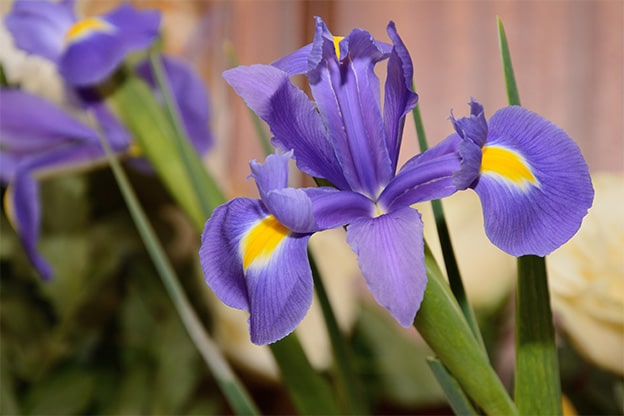
Border irises come in a range of colours from blue to apricot, yellow, white, purple and even black, bringing something to suit every gardener’s taste. These low-maintenance plants thrive in sunny, well-drained soil.
New iris rhizomes must be planted between July and October, but potted irises can be planted any time between March and mid-November.
Water newly planted rhizomes thoroughly in their first year. Afterwards, no routine watering is needed unless in a drought.
Hellebores
Hellebores bring delicate, downward-facing flowers in early spring, adding beauty to any garden. Hardy, low-maintenance and able to endure cold weather, they also offer nectar to early pollinators. Most prefer partial shade and have evergreen leaves, adding year-round interest.
Oriental hybrids (Helleborus x hybridus) are the most favoured and simple-to-grow hellebores, with hundreds of options in cream, pink, or ruby shades, often with speckled petals for extra charm.
By planting these colourful spring flowers in your garden, you can add a splash of colour and life to your outdoor space. Be sure to choose the right flowers for your climate, soil and exposure and to provide the necessary care and attention they need to thrive.